

Irene Ochem is founder & CEO of the Africa Women Innovation and Entrepreneurship Forum (AWIEF), an award-winning, pan-African organisation dedicated to fostering women’s economic inclusion and empowerment through entrepreneurship support and development. AWIEF works to close the gender gaps in entrepreneurship in Africa. Since 2021, AWIEF enjoys Special Consultative Status with the UN Economic and Social Council (ECOSOC).
Irene is an entrepreneurship, trade, and innovation specialist. She holds bachelor’s and postgraduate qualifications from University of Nigeria, Nsukka (Nigeria), University of Trieste (Italy), University of Cape Town (South Africa), and MBA from University of London (UK).
Irene’s interest is focused on gender economic equity and social inclusion. She has 25+ years’ experience working across geographies of Africa and Europe, in international development, research administration management, enterprise development, and private sector growth. Her work at the strategic leadership of AWIEF is focused on driving female entrepreneurship, promoting enterprise and innovation, designing and implementing bespoke women-centred business support programs across different African countries, and mobilizing resources and partnerships.
Irene is the Founder & Convener of the prestigious annual AWIEF Conference and AWIEF Awards, Africa’s largest women entrepreneurship event platform launched in 2015 in Lagos. The AWIEF Conference is an international gathering of 1,300+ African and global entrepreneurship ecosystem stakeholders and partners, for dialogue on issues of women economic empowerment, entrepreneurship, investment, innovation, & technology in Africa.
Irene is passionate about helping women-owned businesses become more competitive and expand their markets having directly trained and supported 2,000+ female-owned startups across different African countries with diverse enterprise development and entrepreneurship capacity building programs. She has provided inputs to regional trade agreements on women economic empowerment and inclusion.
Irene is internationally known for her impactful work and has received reputable recognitions and awards. She has been featured and widely profiled in prestigious national and international media platforms including CNN, BBC, SABC (South Africa), Channel Africa (South Africa), and Channels TV (Nigeria).
She writes, speaks, and participates widely in international meetings on business, entrepreneurship, trade, women, and gender. She serves on boards as Non-Executive Director.
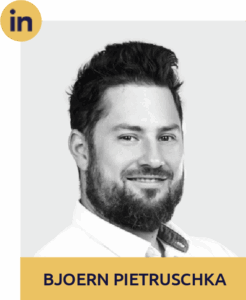
Bjoern is a forward-thinking leader in bioprocess engineering and scientific innovation, with deep experience driving strategic initiatives across the pharmaceuticals, cleantech, and bioenergy sectors. He has a strong track record of founding and leading successful start- ups and laboratories across Africa, Asia, and Europe. Known for his ability to navigate complex business environments, Bjoern combines technical expertise with strategic vision. He excels at fostering cross-cultural collaboration and applying advanced technologies to achieve sustainable growth and operational excellence. His achievements include leading a team to victory in the global 2020 Toilet Board Coalition Accelerator, securing 2nd place in the 2023 Europe Startup Awards, being named a finalist in the 2024 Hello Tomorrow Deep Tech competition, and winning the Net Zero Technology Centre’s TechX prize.
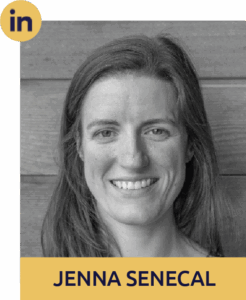
Jenna Senecal completed her PhD in Technology at the Swedish University of Agricultural Sciences (SLU) in 2020. During her studies, she co-developed a technology to safely and effectively recycle the nutrients from urine. She is now commercialising this technology with her start-up company, Sanitation360, while continuing with research on the same topic at SLU.
 Dr Bernelle Verster is passionate about dry toilets. It didn’t start that way; her research journey started in biotechnology and she had no idea where the stuff in the toilets went after flushing. Then she found wastewater when she was looking for cheap raw materials, which led to a PhD in bioprocess engineering on the topic of wastewater biorefineries.
This investigation led her to consider sanitation from cleaner production principles, including the need to separate at source and concentrate the nutrients. She discovered that even if all wastewater treatment plants work perfectly, we are not able to clean water enough to mitigate the damage to receiving waters.
Dry toilets are the only reasonable option, and urine separation the best compromise to get there. For dry toilets to work as a solution for everyone it needs to work well enough for the affluent; it needs to work well, and beautifully, full stop.
Philosophically, talking about toilets is also a way to start talking about what is hidden, what we are ashamed of, what is taboo. It is a way to talk about inequality, to have the conversation about equity, dignity, privilege. If rich people are not willing to use the most sustainable sanitation systems, how can we expect poor people to use it?
Bernelle is currently exploring opportunities in biotech, ranging across the bioeconomy, regenerative ecologies, waste to value, biotech’s role in water sensitive design and urban resilience, and with a special focus on integrating data visualisation, gamification and open source tech into biotech.

Trained as a Chemical Engineer, Dr Randall currently leads a team that is looking at novel ways to recover value from ‘waste’ waters. In 2018 he led the team that grew the world’s first bio-brick from human urine. He is an Associate Professor in Water Quality Engineering at the University of Cape Town and is passionate about the environment, sustainable sanitation processes and making a positive difference to society. He is a previous recipient of the prestigious Future Leaders – African Independent Researcher (FLAIR) Fellowship from the UK’s Royal Society.
He is also a recipient of the Institution of Chemical Engineers Warner Prize for “exceptional research in sustainable chemical processes” as well as a Next Einstein Forum (NEF) Fellow. He has also been appointed by the Vice Chancellor of the University of Cape Town to run a Strategic Initiative on Sustainability, with the aim of making the university campus more sustainable.

Associate professor Jan-Olof Drangert worked up to retirement as a researcher and trainer in the environmental field and based at the Dept. of Water and Environmental Change, Linköping University, Sweden.
His research focus went from rural household water over to urban water and nutrient flows. He applies systems thinking incorporating environment and hygiene issues, resources conservation, technical and building aspects, and human impacts and perceptions.
He prefers to include historical experiences to grasp the evolution of water and sanitation conditions in order to deepen the understanding of what future may hold in store. He has published numerous articles about sanitation, phosphorus recycling, and water management.
Starting from a global resources perspective he studies local and household aspects of persistence and change of conditions and perceptions. The studies include case studies from Sweden and from other cultures. He has worked in East and South Africa as well as South Asia and is fluent in Kiswahili.
In addition to regular teaching at the department he has conducted water and sanitation courses at the University of the Western Cape in South Africa and Nanyang Technical University in Singapore. He was the Director of the 5-week international training programme Ecological Alternatives in Sanitation for ten years with more than 300 professional participants worldwide. From these experiences he developed a web-based training for professionals called Sustainable Sanitation for the 21st Century containing 700 animated slides and attached explanations and references. This can be downloaded for free from www.sustainablesanitation.info or akvo.org on the mobile.
He has developed a novel approach to use an “extended waste hierarchy” that includes both solid and liquid waste streams. The usefulness of such a hierarchy is illustrated by examples related to recovery of nutrient-rich liquid and solid waste from urban flows. Nutrients can be brought back to fertilise urban and farm food production. Water can be conserved and recycled by urban households. Conservation and recovery can prolong ten-fold the lifespan of food security and delay the transgressing planetary resources boundary by hundreds of years and provide 24/7 water supply without depleting surface and groundwater sources.
In an effort to try out new ideas about sustainable living he is engaged in building 24/7 eco-houses for energy, water and vegetables/fruits. Here, science, technologies and human perceptions are married into a system to produce a negligible ecological footprint while retaining comfort and good health. The houses serve as demonstration units to assist residents and builders in becoming less invasive on nature.
 Sarah is a trained nurse and vocal advocate for women’s health and has spent several years educating people in disadvantaged communities about sexual and reproductive health issues.
Sarah’s experiences have inspired her to find solutions to the prevailing problem of “period poverty” — a term commonly used to describe the experiences of women and girls who do not have access to menstrual management products and hygienic spaces in which to use them because of their socio-economic conditions. She sampled a range of eco-friendly products and compared them in terms of durability, convenience and hygiene to come up with a clear winner: Safepad™.
This reusable pad is designed with anti-microbial technology to kill bacteria, thus preventing infections. During the years of working as an HIV nurse, distributing sustainable menstrual products and conducting reproductive health sessions in schools, child and youth care centers, NGOs, communities and more, she engaged in many conversations with youth, staff and community members who shared the same issue: women and girls cannot afford proper menstrual products, causing them to miss school and work.
Girls are repeatedly getting infections, using rags, toilet paper, socks and other unsafe materials. Teachers are spending their own salaries to provide students with pads. Access to menstrual and hygiene products for women and girls will address a critical community need — staying healthy, clean, and safe from infections. Work and school attendance is highly dependent on access to privacy and basic facilities that allow proper menstrual management.
The menstrual cycle is a natural part of being female, and these conversations continue to motivate Sarah to do her best to reduce period poverty and create awareness about it. Her purpose is to connect people with products and processes that contribute to resilience and peace of mind in everyday life.
Her mission is to make Safepad™ available to all women from all backgrounds who stand to benefit from this innovative menstrual management product, which is both hygienic and sustainable. No girl or woman — regardless of background, culture, race or religion — should be held back from living her purpose because of her period. Whether at school, work or home, she should be able to manage her period safely, comfortably and hygienically.